
1. Connect your measurement
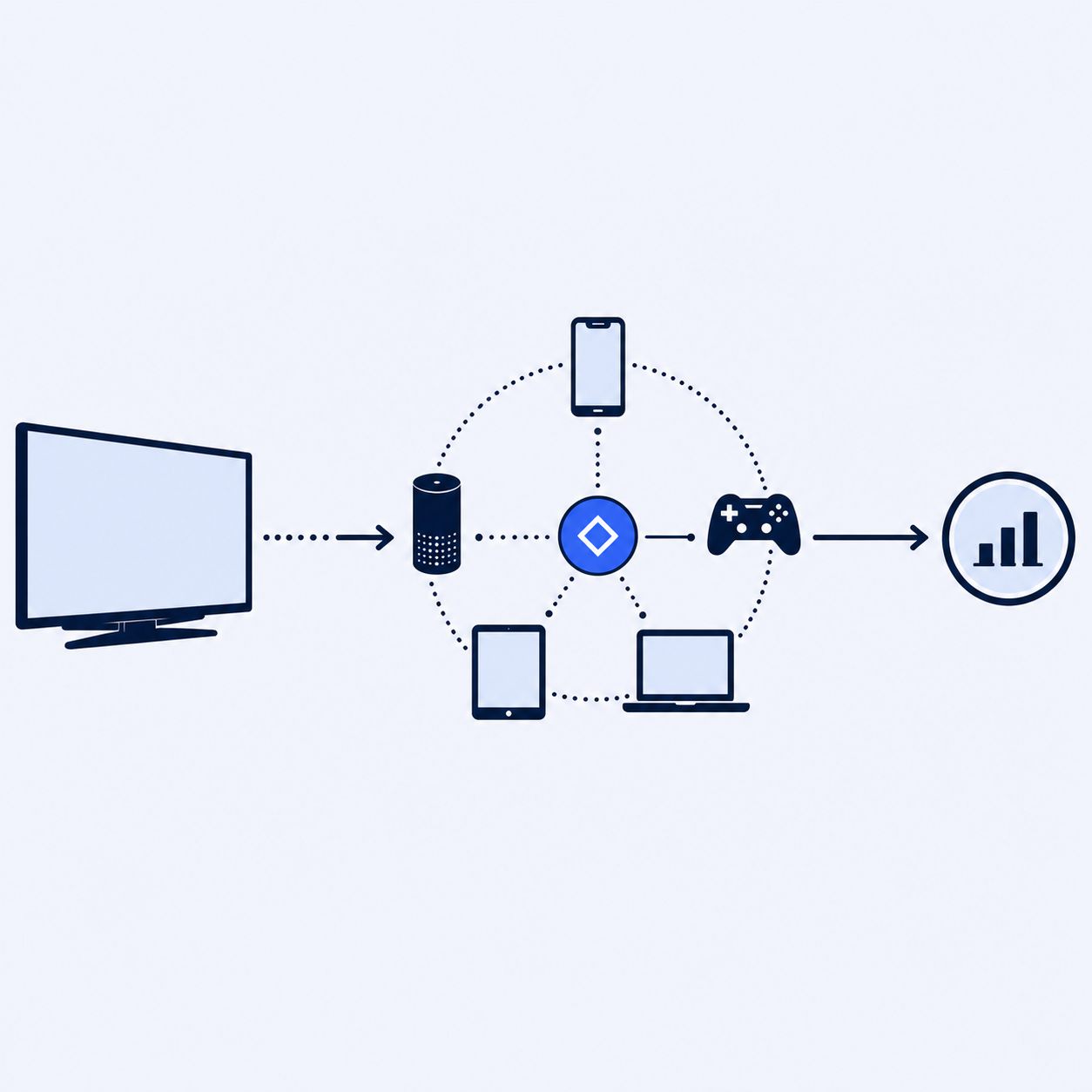
Connect the measurement partners you already use, and turn on cross-device tracking. A living-room impression can be associated with a conversion that happens later on a phone.
ORCA Ads · Performance CTV
ORCA Ads is a mobile DSP for global advertisers and media-buying teams. Performance CTV connects connected-TV inventory into the same judgment: predict user value on every ad request, and complete the bid in milliseconds. Living-room impressions aim at households more likely to install, convert, or return value, and results come back to the acquisition and ROAS you already measure.
01 · A performance mindset for TV
Connected TV can reach users in high-attention settings. For performance teams, the real question is whether this impression becomes an install, a registration, a purchase, or another business event already measured on mobile.
ORCA Ads puts Performance CTV inside the mobile DSP's campaign logic. You set acquisition, conversion, or ROAS goals; the system scores user value on every CTV ad opportunity, then bids in real time. TV can be compared with your other performance channels against the same outcomes.

02 · From campaign goals to a learning loop
Connect the measurement partners you already use, and turn on cross-device tracking. A living-room impression can be associated with a conversion that happens later on a phone.
Choose the event campaigns should drive: installs, purchases, registrations, subscriptions, or another revenue-related action. You set the goal; the system scores every request against it.
ORCA predicts user value on every CTV ad request and completes the bid in milliseconds. Bids aim at households more likely to complete that event. Conversion signals that come back enter later budget and inventory optimization.
Read results in your own measurement stack. Then use holdout tests to separate conversions CTV actually produced from conversions that would have happened anyway. Budget increases rest on a readable evidence base.
03 · Performance CTV capabilities
CTV often lacks a stable device-level identifier. ORCA judges at the household: is this opportunity worth this price? Every auction is scored by the conversion value that household may contribute, with frequency caps, existing-customer suppression, and include or exclude lists applied before the bid. Demographics can be a signal; bids still aim at the business event you set.
Results land with the measurement partners you already use. The default window is 7-day click / 1-day view; a longer view window can be used if the partner supports it for CTV. ORCA does not add a proprietary attribution layer between spend and reporting. Raw delivery and outcome data can be exported to your own BI.
Run geo-split or audience holdout tests in parallel with campaigns, to separate conversions CTV actually produced from conversions other channels were already getting. Tests are designed with your team in advance, and budget increases wait until readable results appear at normal spend levels.
Buy ad-supported streaming apps, free ad-supported TV channels, and smart-TV native inventory. App-level blocks, category exclusions, and pre-bid invalid-traffic filtering can apply on every auction. Delivery can be limited by country, region, or DMA.
Deliver 15-second and 30-second video to standard CTV specs, with companion display units when the publisher supports them. Creative-review cycle times should be confirmed with product before publication.
User-value prediction, real-time bidding, audience matching, and budget optimization on CTV use the same capabilities as ORCA Ads user acquisition and remarketing campaigns. See the ORCA Ads overview for the full description.
04 · What Performance CTV can help teams pursue
CTV opens inventory app campaigns cannot buy. Living-room settings can reach households not yet covered on mobile, and pull later installs, registrations, or purchases back into the same measurement.
Results are attributed in your own stack. CTV can sit on the same ROAS table as social, search, and in-app buying, with conversion definitions held constant.
After a TV impression, conversion often happens on a phone. Cross-device measurement connects this request to the business event you want, so media-buying teams can read CTV on acquisition and conversions.
Expand budget after holdout tests confirm incrementality. Scale rests on verifiable incrementality and the performance definitions you already use.
05 · Designed for measurable customer journeys

Use CTV to introduce an app or game to new audiences, and count impressions toward user acquisition, activation, and later ROAS.

Support awareness and acquisition for eligible financial products, with campaign planning aimed at approved customer actions such as opening an account or completing a key conversion.

Reach prospective users in high-attention settings, and evaluate the campaign's contribution to service adoption, first orders, or repeat use.

Put CTV into a broader acquisition plan, attract prospective subscribers, and optimize bids on subscription conversions and user value.

Bring product or brand narrative to TV, while evaluating its contribution to digital purchases, first orders, and ROAS.
06 · Start from a clear test design
Every CTV test states the business question first, then the media plan. ORCA works with your team to define the target outcome, the holdout, and the evidence that would support adding budget. Success events, holdout design, and decision thresholds are aligned in advance, so the test ends with a judgment you can act on.
07 · Performance CTV in practice
A subscription consumer brand selling in North America had treated CTV as an awareness line, bought and reported separately from performance channels. The team switched to bidding on predicted subscription value at the household, suppressed existing subscribers before the bid, and returned results through its own measurement partner. CTV started to be readable next to mobile acquisition channels: whether budget was buying households more likely to complete a subscription.
"CTV used to live in another spreadsheet, with a different definition of success. Once it reported the same way as other channels, we could actually decide how much budget it should take." — Head of Growth Marketing
A multi-brand commerce retailer running seasonal campaigns in Western Europe wanted to expand CTV budget, but could not tell which conversions TV produced versus which other channels would have gotten anyway. The team ran a geo holdout in parallel with online campaigns, agreeing holdouts and decision thresholds before spend started. After the test produced a readable result, budget increased market by market, with investment decided on verifiable incrementality.
"We needed to prove CTV added conversions other channels were not already being credited for. The holdout gave us that basis." — VP of Performance Marketing
09 · Publication Checklist
10 · FAQ
Performance CTV buys connected-TV inventory against predicted business outcomes. ORCA scores each household's likelihood of completing the target event and bids in real time on that basis. Results are attributed through your own measurement partners, so CTV can be compared directly with your other acquisition channels.
Installs, purchases, subscriptions, registrations, first orders, and other revenue-related events your measurement partner can send back. Optimization needs enough target-event volume returning for the system to adjust bids steadily.
In your stack. Results are attributed through the measurement partners you already use, with a default window of 7-day click / 1-day view, and raw delivery and outcome data can be exported to your BI environment. To see causal incrementality, run geo-split or audience holdout tests in parallel with campaigns.
Ad-supported streaming apps, free ad-supported TV channels, and smart-TV native placements, bought programmatically, with app-level reporting. Delivery can be limited by country, region, or DMA, and every auction goes through pre-bid invalid-traffic filtering.
A measurement-partner connection with cross-device tracking turned on, events that define a valuable customer, video creative, and budget. Go-live can proceed once the data connection is ready; regulated categories usually need longer review.
CTV tests need enough volume for a clean read, so minima are set by market and test design.
Yes. Most advertisers run CTV alongside mobile user acquisition and remarketing. Shared suppression and frequency controls avoid rebuying households that have already converted. Both lines report against the same outcome definition in your measurement partner.
Next step
Talk with us about your audiences, conversion events, measurement approach, and market scope. We'll assess how connected TV can connect to mobile campaigns you already run, and how to decide on acquisition, conversions, and ROAS.
Prefer email?business@orcamobile.net